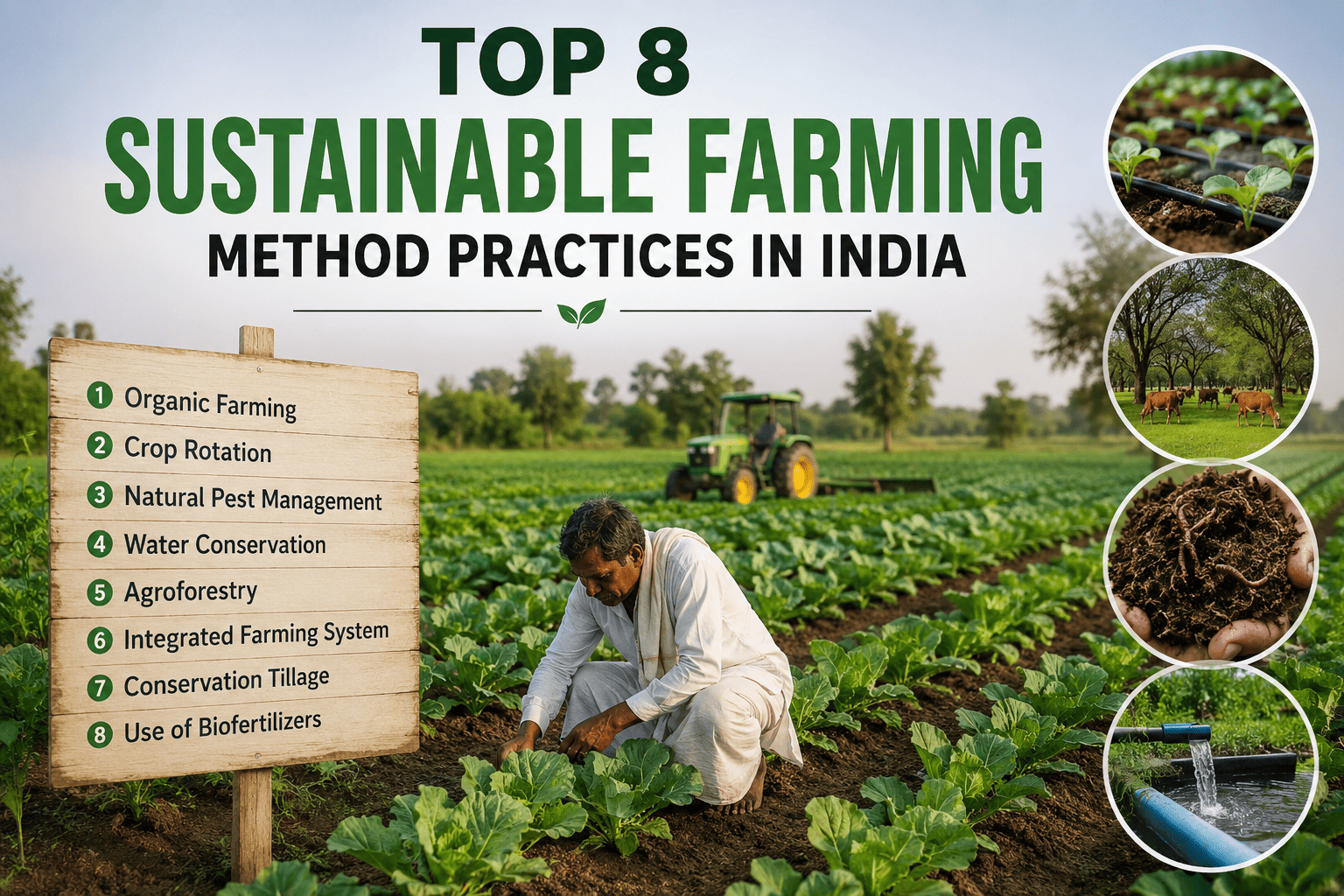
Nowadays, Farming is not just about growing more crops. It is also about protecting soil, water, and the environment for future generations. This is where a sustainable farming method becomes very important.
A sustainable farming method means growing crops in a way that keeps the soil healthy, saves water, protects nature, and also supports the farmer’s income. It focuses on balancing high productivity today without harming the future farming system.
In recent years, more farmers are moving toward sustainable agriculture practices because of rising input costs, soil damage, water shortage, and climate change problems.
Popular Sustainable Farming Methods
A sustainable farming method is a way of farming that uses natural and smart practices to grow crops while protecting the environment. In simple words, it means farming in a way that does not harm soil, water, or air.
Zero Budget Natural Farming (ZBNF)
- This method avoids chemical fertilizers and pesticides completely.
- Farmers use natural inputs like cow dung, cow urine, jaggery, and pulse flour mixtures.
- One popular solution is Jeevamrutha, which increases helpful microorganisms in soil.
- It improves soil health and reduces farming costs over time.
Vermicomposting
- This means making compost using earthworms.
- Farm waste like leaves, vegetable scraps, and dung is converted into organic manure.
- It produces rich compost that improves soil fertility.
- It also helps soil hold more water and become more fertile naturally.
Micro-Irrigation (Drip and Sprinkler Systems)
- Water is given directly to plant roots in small amounts.
- Drip irrigation saves a lot of water compared to flood irrigation.
- It is very useful in dry and water-scarce areas.
- It also improves crop growth and reduces water wastage.
Rainwater Harvesting
- Rainwater is collected and stored for future use.
- It helps recharge underground water levels.
- Farmers can use this water during dry seasons.
- It reduces dependence on borewells and groundwater
Crop Rotation and Intercropping
- Crop rotation means growing different crops one after another in the same field.
- For example, cereals followed by pulses or oilseeds.
- This improves soil nutrients naturally, especially nitrogen.
- It also reduces pests and diseases in the soil.
- Intercropping means growing two crops together in the same field for better land use.
Mulching
- Mulching means covering soil with straw, leaves, or crop waste.
- It helps stop weed growth.
- It keeps soil moist for a longer time by reducing water evaporation.
- It also protects soil from heat and erosion.
Integrated Pest Management (IPM)
- This method controls pests using a combination of safe techniques.
- It includes natural predators, traps, organic sprays, and careful monitoring.
- Chemical pesticides are used only when absolutely necessary.
- It protects crops without harming soil, humans, and beneficial insects.
Agroforestry
- This means growing trees along with crops on the same farm.
- Trees protect crops from wind and heat.
- They prevent soil erosion and improve soil moisture.
- Farmers can earn extra income from fruits, wood, or fodder.
- It also increases biodiversity and improves farm sustainability.
Benefits of Sustainable Farming Methods
- Farmers can save money by using natural manure, crop rotation, and natural pest control methods.
- It reduces the need for expensive chemical fertilizers and pesticides.
- Overall farming costs become much lower.
- Sustainable farming increases organic matter in the soil.
- It helps soil hold more water and nutrients.
- Soil becomes more fertile and does not get damaged easily.
- Methods like agroforestry and drip irrigation protect crops from drought and irregular rainfall.
- Farms become more stable during extreme weather conditions.
- Crop loss risk is reduced.
- Less use of harmful chemicals means safer food.
- Fruits and vegetables are more natural and healthy to eat.
- It improves overall food quality for consumers.
- The Indian government supports sustainable farming practices.
- Schemes like Paramparagat Krishi Vikas Yojana (PKVY) help farmers financially.
- Farmers get training and incentives to shift towards organic and natural farming.
Challenges in Adoption
- Switching to sustainable farming needs some investment at the start.
- Farmers may need money for tools, training, or new farming systems.
- In the beginning, crop production may be reduced for a short time.
- Farmers may take time to adjust to new methods like organic farming or no-till farming.
- Many farmers do not get enough local training or guidance.
- It becomes difficult to understand new farming techniques easily.
- Unpredictable rainfall, droughts, and temperature changes affect farming.
- This makes it harder to fully depend on new methods.
- Small farmers may find it hard to adopt all changes at once.
- Limited resources make the transition slower.
Trusted Biostimulants & Organic Fertilizers for Sustainable Farming
SV Agro Solutions is a leading biostimulants manufacturer in Pune, committed to supporting farmers with high-quality solutions that improve plant health and boost agricultural productivity. As a trusted biostimulants company in Pune, we focus on developing innovative products that promote sustainable and eco-friendly farming practices.
We are also a reliable biostimulants supplier in Pune, serving local farmers as well as exporting our products to international markets. Our products are designed to meet global agricultural standards and suit different farming conditions.
For better results in sustainable farming, we also recommend using our organic fertilizers, which help improve soil health naturally, increase soil fertility, and support long-term farm productivity without harming the environment.
Conclusion
A sustainable farming method is not just a farming technique; it is a long-term solution for better agriculture. It helps farmers grow healthy crops while protecting soil, water, and the environment.
For more help with sustainable farming practices and to get the right organic solutions for your farm, contact SV Agro Solutions. Our team is here to guide you with the best biostimulants and organic fertilizers to support healthy soil, better crop yield, and long-term sustainable farming success.
FAQs
How does sustainable farming improve soil health?
It adds organic matter, reduces chemical use, and improves soil structure and microbes.
Is sustainable farming profitable for small farmers?
Yes, it reduces input costs and improves long-term productivity.
Can sustainable farming replace conventional farming completely?
It may not fully replace it immediately, but it can significantly improve farming systems when combined wisely.