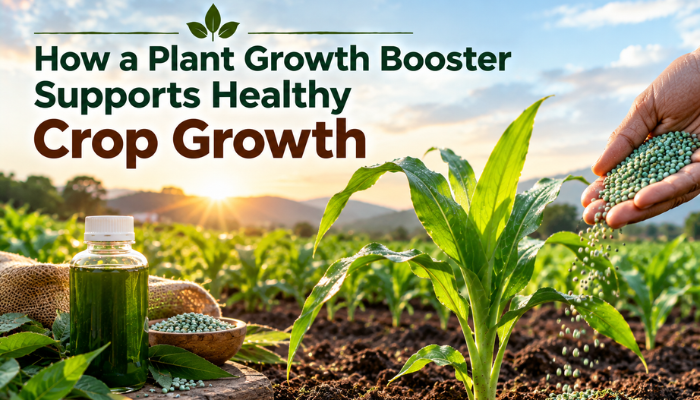
Every farmer wants healthy crops, good flowering, better fruit development, and a good harvest. To achieve this, crops need healthy soil, balanced nutrition, enough water, and proper care at every growth stage.
A Plant Growth Booster can support natural plant growth processes, including root development, leaf growth, flowering, and fruit setting. When used correctly, it helps plants use available nutrients effectively and supports healthy crop development.
What is a Plant Growth Booster?
A Plant Growth Booster is an agricultural fertilizer that supports plant growth and development. Depending on the product, it may contain plant growth regulators, seaweed extracts, amino acids, humic substances, or beneficial microbes.
These ingredients can support root growth, leaf development, flowering, and fruit formation. However, a Plant Growth Booster cannot replace fertilizers. Fertilizers provide essential nutrients, while growth boosters support plant growth processes.
Farmers should always select a suitable product and follow the recommended dose and application instructions.
How a Plant Growth Booster Supports Crop Growth
A Plant Growth Booster helps improve root development, nutrient uptake, flowering, fruit growth, and overall crop health.
1. Supports Germination and Early Growth
- The early growth stage is important for every crop.
- Some plant growth boosters help seeds germinate and young crops establish properly.
- Healthy early root and shoot growth helps plants absorb water and nutrients from the soil.
- This support can be useful after sowing, transplanting, or during the early stages of crop growth.
2. Encourages Strong Root Development
- Healthy roots help plants absorb water and essential nutrients from the soil.
- Some Plant Growth Booster products support root formation and development, helping plants establish better and grow more strongly.
- A healthy root system also helps plants remain stable and use available nutrients more effectively.
3. Supports Healthy Leaf and Plant Growth
- Green leaves help plants prepare food through photosynthesis.
- A Plant Growth Booster may support leaf development, stem growth, and overall plant health.
- Healthy plant growth during this stage helps crops prepare for flowering and fruit development.
4. Supports Flowering and Fruit Setting
- Flowering and fruit setting are important stages for many crops.
- Certain plant growth boosters and Plant Growth Regulators help manage plant growth processes related to flowering, fruit setting, and fruit development.
- The results depend on the crop, product, recommended dose, and application time. Farmers should select products according to their crop requirements.
5. Helps Plants Manage Environmental Stress
- Crops may face stress due to high temperatures, limited water, transplanting, or poor soil conditions.
- Some plant growth boosters support plant activity and nutrient uptake during mild stress.
- However, they cannot replace proper irrigation, healthy soil, pest control, or other essential crop management practices.
6. Helps Plants Use Nutrients Better
- Crops need essential nutrients throughout their growth.
- Healthy roots and balanced plant growth can help crops use available nutrients more effectively.
- Some microbial-based products may also support nutrient availability in the soil.
For better results, farmers should combine suitable growth boosters with soil testing and balanced fertilizer application.
Common Types of Plant Growth Boosters
Common types of Plant Growth Boosters include seaweed extracts, amino acids, humic acid, fulvic acid, microbial products, and Plant Growth Regulators.
1. Plant Growth Regulators
- Plant Growth Regulators are substances that influence plant growth and development.
- Common types include auxins, gibberellins, cytokinins, abscisic acid, and ethylene.
- For example, auxins support root development, gibberellins help with stem growth and seed germination, and cytokinins support cell division.
2. Seaweed Extracts
- Seaweed-based products are used in agriculture to support plant growth and help crops manage environmental stress.
- Depending on the product, they may support leaf growth, flowering, and fruit development.
They can be applied through foliar sprays or to the soil, according to the product instructions.
3. Amino Acid-Based Boosters
- Amino acid-based boosters support important processes within plants.
- They are commonly used to support crop growth and recovery during certain stress conditions.
- The correct application method and dose depend on the product and crop.
4. Humic and Fulvic Acid Fertilizers
- Humic and fulvic acid fertilizers can support root development and nutrient uptake.
- Their effectiveness also depends on soil health, irrigation, and the crop's nutritional requirements.
5. Microbial Growth Boosters
- Microbial growth boosters contain beneficial microorganisms that may support root development, nutrient availability, and plant growth.
- Certain beneficial bacteria can also help improve nutrient uptake and support early plant development.
When Should Farmers Use a Plant Growth Booster?
Farmers can use a Plant Growth Booster during sowing, early plant growth, flowering, fruit development, or mild stress to support healthy crop growth.
1. During Sowing or Transplanting
It may support early root growth and help young plants adjust after transplanting.
2. During Active Plant Growth
It may help improve the growth of roots, leaves, and stems.
3. Before Flowering and During Fruit Development
Suitable products may support flowering and fruit development when used as recommended.
4. During Mild Stress Conditions
Some boosters may help plants manage mild heat, water shortage, or transplanting stress. Proper irrigation and crop care are also important.
How to Use a Plant Growth Booster Correctly
Farmers should follow these practices for better results:
- Read the product label before use.
- Select the product according to the crop and its growth stage.
- Use the recommended dose and avoid excess application.
- Follow the correct application method, such as seed treatment, soil application, drip irrigation, or foliar spray.
- Avoid spraying during very hot, windy, or rainy weather.
- Mix different products only when they are confirmed to be compatible.
- Record the application date, dose, and crop response.
Common Mistakes to Avoid
Farmers should avoid these common mistakes when using a Plant Growth Booster:
- Using a product without understanding the crop's needs.
- Applying more than the recommended dose.
- Mixing products without checking compatibility.
- Using a growth booster instead of fertilizers or proper irrigation.
- Applying the product at the wrong crop stage.
- Ignoring weather conditions, product instructions, and safety precautions.
How SV Agro Solutions’ Plant Booster Fertilizer Supports Healthy Crop Growth
SV Agro Solutions Pvt. Ltd. offers agricultural products designed to support healthy crop growth and improve soil health. As a trusted Plant Booster Fertilizer Manufacturer in Pune, the company provides solutions that help promote root development, nutrient uptake, and overall plant growth. Its product range includes SV Sugarban, an organic liquid soil conditioner made with ingredients such as seaweed and vermiwash, suitable for crops like grapes, pomegranates, bananas, and sugarcane.
SV Agro Solutions offers products to support farmers at different stages of crop growth. SV Sugarban helps promote vegetative growth, beneficial soil microorganisms, and fruit development when used as recommended.
Conclusion
A Plant Growth Booster can support healthy crop growth by encouraging root development, improving plant vigour, and supporting flowering and fruit development. It can also help plants use available nutrients more effectively when combined with balanced fertilization.
For better results, farmers should choose the right product for their crop, apply it at the correct growth stage, and follow the recommended dose. Healthy soil, proper irrigation, and timely crop care are equally important for good crop growth and productivity.
FAQs
1. Is plant booster good for plants?
Yes, a Plant Growth Booster can support root development, healthy leaves, and better flowering when used correctly.
2. What is a good growth booster for plants?
Seaweed Extract, Humic and Fulvic Acid, and Vermicompost are common options that support root growth and nutrient absorption.
3. Can a Plant Growth Booster replace fertilizer?
No. Fertilizers provide essential nutrients, while a Plant Growth Booster supports plant growth processes. Both should be used according to the crop's needs.
4. When should farmers use a Plant Growth Booster?
Farmers may use a suitable booster during sowing, transplanting, active plant growth, before flowering, or during fruit development, depending on the product instructions.
5. What are the main types of Plant Growth Boosters?
Common types include Plant Growth Regulators, seaweed extracts, amino acid-based products, humic and fulvic acid products, and microbial growth boosters.