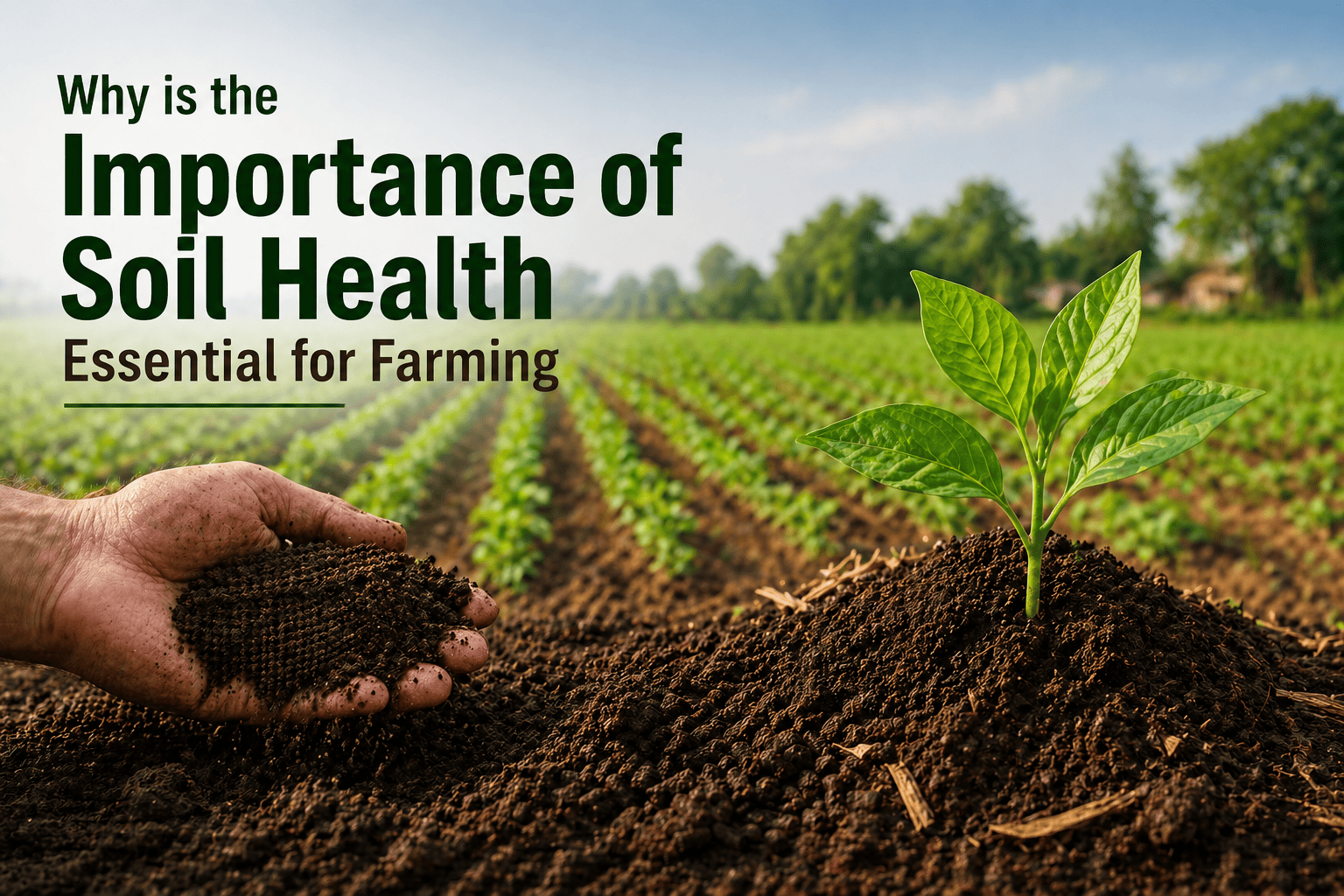
Soil is the foundation of farming. Many farmers think of soil as just dirt, but in reality, it is a living system full of life and energy. The importance of soil health cannot be ignored because it directly affects plant growth, crop yield, and long-term farming success.
Healthy soil supports farming productivity and environmental balance. It helps plants grow stronger, improves water quality, and protects the ecosystem. Good soil means better crops and higher income for farmers.
Importance of Soil Health in Agriculture
Plants depend completely on soil for their growth. Healthy soil provides everything a plant needs: support, water, oxygen, and nutrients.
1. Better Crop Yield and Quality
Healthy soil provides all the essential nutrients that plants need, such as nitrogen, phosphorus, and potassium, in the right balance. When soil is rich and well-structured, plant roots can grow deeper and spread easily. This helps plants absorb more nutrients and water.
Because of this:
- Crops grow faster and stronger
- Fruits, vegetables, and grains become bigger and better in quality
- Yield per acre increases
Soil directly leads to better production and higher profits for farmers.
2. Better Water Holding Capacity
Soil that contains enough organic matter (like compost or manure) can hold water like a sponge. This is very useful during dry periods because plants can use stored water.
At the same time, healthy soil also allows excess water to drain out properly. This prevents:
- Waterlogging
- Root damage
- Crop loss during heavy rains
So, healthy soil helps manage both drought and heavy rainfall conditions.
3. Natural Nutrient Supply (Nutrient Cycling)
Healthy soil contains many beneficial microorganisms like bacteria and fungi. These tiny organisms break down organic materials such as crop residues and manure.
During this process:
- Nutrients are released slowly into the soil
- Important elements like nitrogen, phosphorus, and potassium become available to plants
This natural process reduces the need for chemical fertilizers and keeps the soil fertile for a longer time.
4. Resistance to Pests and Diseases
In healthy soil, there is a wide variety of useful organisms. These organisms protect plants by:
- Controlling harmful bacteria and fungi
- Improving plant immunity
- Supporting strong plant growth
Strong plants are less likely to be affected by pests and diseases. This reduces:
- Crop damage
- Cost of pesticides
- Dependence on chemicals
5. Prevents Soil Erosion
Soil erosion is a big problem where topsoil gets washed away by rain or blown away by wind. This top layer is very important because it contains most of the nutrients.
Healthy soil:
- Has good structure
- Is rich in organic matter
- Holds together firmly
Because of this, it stays in place and reduces soil loss. This protects farm productivity for the long term.
6. Helps in Climate Control
Soil plays an important role in controlling the climate. It stores carbon from the atmosphere in the form of organic matter.
- Healthy soil captures and stores carbon (acts as a carbon sink)
- Poor or degraded soil releases carbon into the air
By maintaining soil health, farmers can:
- Reduce climate change impact
- Improve environmental sustainability
- Support long-term farming
Signs of Poor Soil Health
Farmers need to identify unhealthy soil early.
- Soil becomes hard and tight, making it difficult to dig or for roots to grow properly
- Water problem in soil, either water stays on the surface (puddles) or dries too quickly
- No signs of life in the soil, like earthworms, insects, or fungi, which shows low soil activity
- Plants do not grow well, they stay small, leaves turn yellow, stems are weak, and crops give poor yield even after using fertilisers
- Soil colour looks very light or grey instead of dark, and it may have a bad or sour smell
- A hard layer forms on the top of the soil, stopping water from going inside and making it difficult for seeds to grow
If soil lacks nutrients and biological activity, it cannot support proper crop growth.
How to Improve Soil Health?
Improving soil health is possible with simple and effective farming practices.
- Add organic materials like compost, manure, dry leaves, or straw to improve soil quality and help it hold more water
- Keep the soil covered using mulch or cover crops to protect it from erosion and reduce weed growth
- Avoid too much digging or ploughing so the soil structure stays natural and does not become hard or compact
- Grow cover crops during empty seasons, so plant roots keep feeding and supporting soil microorganisms
- Grow different types of crops in rotation to improve soil health, reduce pests, and increase the variety of useful soil microbes
Conclusion
The importance of soil health is very clear, as it is the base of good farming, healthy crops, and a balanced environment. By maintaining soil health, farmers can improve crop yield, reduce costs, and ensure long-term sustainability.
Looking for ways to improve soil health for better crop yield and sustainable farming? SV Agro Solutions supports healthy soil through high-quality biostimulant products. As a trusted manufacturer and supplier in Pune, we help boost plant growth, improve soil fertility, and support sustainable farming while reducing chemical use and meeting global standards.
FAQS
1. What are the 5 principles of soil health?
The 5 principles of soil health are keeping soil covered (soil armor), reducing soil disturbance, growing diverse crops, keeping living roots in the soil, and integrating livestock.
2. What are the 5 factors affecting soil?
The 5 factors affecting soil are climate, organisms, landform (relief), parent material, and time.
3. What are the five 5 components of soil?
The 5 components of soil are minerals, organic matter, living organisms, air, and water.
4. What are the three methods of adding nutrition to soil?
The three natural methods of adding nutrients to soil are leaving fields fallow, crop rotation, and mixed cropping