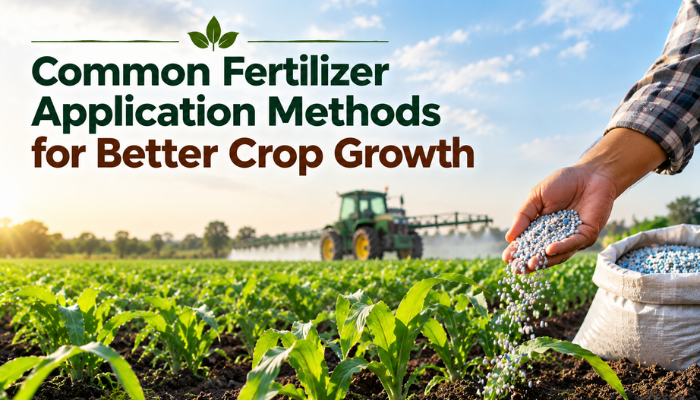
Crops need the right nutrients at different stages of growth. However, the results also depend on how and when fertilizers are applied. The correct method helps plants absorb nutrients, reduces fertilizer waste, and supports healthy crop growth.
Fertilizer application methods are the different ways farmers apply fertilizers to the soil, near plant roots, through irrigation water, or directly onto leaves. The best method depends on the crop, fertilizer type, soil condition, irrigation system, and growth stage.
What Are Fertilizer Application Methods?
Fertilizer application methods explain how fertilizers are spread or placed so that crops can use their nutrients effectively.
Common methods include broadcasting, band or row placement, starter fertilizer application, top dressing, side dressing, foliar application, fertigation, and deep placement.
Choosing the right method, application rate, and timing helps crops receive the nutrients they need and reduces nutrient loss.
Common Fertilizer Application Methods
Common fertilizer application methods include broadcasting, band placement, top dressing, side dressing, foliar application, and fertigation to help crops receive essential nutrients for healthy growth.
1. Broadcasting
- Broadcasting means spreading fertilizer evenly over the soil surface.
- Farmers can use this method before planting or while crops are growing.
- Fertilizer may also be mixed into the soil before sowing, depending on the crop and product.
- This method is commonly used for crops planted closely together and for applying fertilizers before planting.
Tip: Spread fertilizer evenly to avoid areas with too much or too little nutrients.
2. Band or Row Placement
- Band or row placement means applying fertilizer in a narrow strip beside or below the crop row.
- This places nutrients closer to young roots and can improve nutrient availability.
- It is often used during planting, especially for nutrients such as phosphorus.
Tip: Keep the recommended distance between fertilizer and seeds or roots to prevent damage.
3. Starter Fertilizer Application
- Starter fertilizer application involves placing a small amount of fertilizer near seeds or young plants to support early growth.
- It can be helpful when the soil is cool or lacks essential nutrients.
Tip: Follow crop-specific recommendations because concentrated fertilizer can damage seeds and young roots if placed incorrectly.
4. Top Dressing
- Top dressing means applying fertilizer to the soil surface around crops after planting.
- It is commonly used to supply nutrients, especially nitrogen, during active crop growth.
- Rainfall or irrigation may help move the nutrients into the root zone, depending on the fertilizer type.
Tip: Avoid applying fertilizer just before heavy rain to reduce nutrient loss.
5. Side Dressing
- Side dressing means applying fertilizer beside crop rows while the crop is growing.
- It supplies additional nutrients when plants need them most and is commonly used for nitrogen in row crops.
Tip: Apply fertilizer at the recommended distance from plants and water it in when required.
6. Foliar Application
- Foliar application means spraying a suitable fertilizer solution directly onto plant leaves.
- It is often used to correct certain micronutrient deficiencies and provide nutrients that plants can absorb through their leaves.
Tip: Use a fertilizer approved for foliar application and follow the recommended dose to prevent leaf damage. Foliar application should not replace the complete soil-fertilizer programme.
7. Fertigation
- Fertigation is the process of applying soluble fertilizers through irrigation water.
- It is commonly used with drip and sprinkler irrigation systems.
- This method allows farmers to supply nutrients in smaller doses during the growing season and deliver them to the irrigated root zone.
Tip: Use suitable water-soluble fertilizers and maintain irrigation lines properly to prevent blockages.
8. Deep Placement
- Deep placement means placing fertilizer below the soil surface, near the active root zone.
- This method is suitable for certain crops and fertilizer types when recommended for local soil and growing conditions.
Tip: Follow crop-specific guidance for the correct fertilizer, depth, and application time.
How to Choose the Right Fertilizer Application Method
Consider the following factors before selecting a fertilizer application method:
- Crop type: Broadcasting may suit closely sown crops, while band placement and side dressing may suit row crops.
- Nutrient type: Some nutrients benefit from placement near roots, while foliar application can help correct certain micronutrient deficiencies.
- Soil and weather: Soil type, moisture, drainage, and rainfall affect nutrient movement and fertilizer loss.
- Available equipment: Choose a method that can be applied accurately with your available farm equipment.
- Soil-test results: Select the fertilizer type and quantity based on the actual nutrient needs of the soil and crop.
Best Practices for Applying Fertilizers
Follow these practices for better fertilizer use:
- Test the soil and follow advice for your crop.
- Use the right fertilizer in the correct amount and at the right growth stage.
- Check and adjust fertilizer spreaders, sprayers, and irrigation equipment before use.
- Keep fertilizer away from seeds and roots unless the method allows direct contact.
- Avoid applying fertilizer before heavy rain or on wet, waterlogged soil.
- Wear safety gear and follow the instructions on the fertilizer pack.
- Keep a record of the fertilizer used, quantity, application date, and crop growth.
Common Fertilizer Application Mistakes to Avoid
Farmers should avoid these common fertilizer application mistakes:
- Applying fertilizer without checking what the soil and crops need.
- Spreading fertilizer unevenly across the field.
- Using fertilizer equipment without checking or adjusting it properly.
- Applying fertilizer too close to seeds, roots, or stems.
- Applying all nutrients at once instead of at the right growth stages.
- Depending only on foliar sprays instead of using a complete fertilizer plan.
- Applying fertilizer without checking the weather or reading the product instructions.
Conclusion
Common Fertilizer Application Methods include broadcasting, band placement, starter fertilizer application, top dressing, side dressing, foliar application, fertigation, and deep placement. Each method serves a different purpose, and no single method is suitable for every crop.
SV Agro Solutions Pvt. Ltd. offers quality biostimulants that support healthy plant growth, improve nutrient uptake, and promote flowering and fruit development. As a trusted Biostimulants Manufacturer in Pune, SV Agro Solutions provides a wide range of products, including SV Fruiter, SV Canter, SV 59, SV Fulora, SV SN 40, SV Cofez, SV Rounder P, SV Rounder L, SV Defence, SV Sugarban, and SV Size Builder to meet the needs of different crops.
If you are looking for a reliable Biostimulants Supplier in Pune, SV Agro Solutions offers agricultural solutions that support crop health and sustainable farming practices. Choose SV Agro Solutions biostimulants to support plant development, improve crop quality, and work towards better farm productivity. Visit our website to learn more about our products
FAQs
1. What is the best time to apply fertilizer?
The best time to apply fertilizer depends on the crop, season, growth stage, and weather conditions.
2. Which NPK is best for fruiting?
NPK fertilizers with low nitrogen and higher phosphorus and potassium can support flowering, fruit growth, and fruit quality.
3. Which fertilizer releases nutrients fast?
Water-soluble and liquid fertilizers release nutrients quickly, making them available for plants to absorb.
4. What is fertigation?
Fertigation is the process of applying soluble fertilizers through irrigation water. It helps supply nutrients to the root zone during the growing season.
5. Can farmers apply fertilizer directly to plant leaves?
Yes. Foliar application involves spraying a suitable fertilizer solution onto plant leaves. It can help correct certain nutrient deficiencies, but it should not replace the crop's complete soil-nutrition plan.