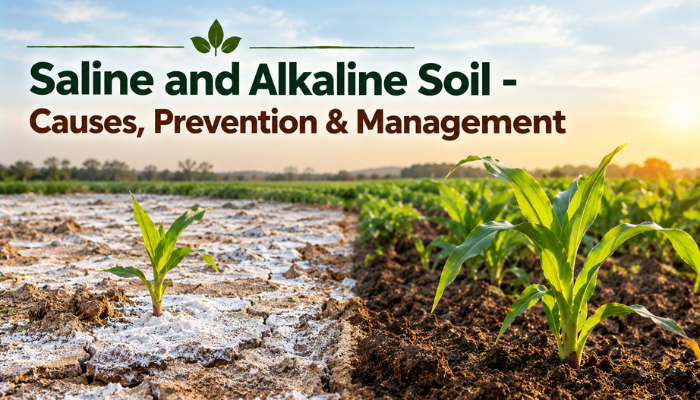
Are your crops growing slowly even after applying fertilizers and providing enough water? The problem may be Saline and Alkaline Soil.
Excess salts and sodium in the soil can damage roots, reduce water absorption, affect nutrient availability, and lower crop yield. Farmers may also notice white salt deposits, poor seed germination, and slow plant growth.
The good news is that proper soil testing and the right management methods can help improve soil health. First, farmers need to identify whether the field has saline soil, alkaline or sodic soil, or saline-sodic soil.
What is Saline and Alkaline Soil?
Saline Soil: This soil contains excess soluble salts. These salts make it difficult for plant roots to absorb water, even when the soil has enough moisture.
Alkaline or Sodic Soil: This soil has a high pH and excess sodium. Sodium damages the soil structure, making it difficult for water and air to reach the roots.
Saline-Sodic Soil: This soil contains both excess soluble salts and high levels of sodium.
A soil test helps identify the exact problem. Farmers should check electrical conductivity (EC), pH, and sodium-related values such as exchangeable sodium percentage (ESP) or sodium adsorption ratio (SAR).
Difference Between Saline Soil and Alkaline/Sodic Soil
Understand how excess salts and sodium affect soil structure, water absorption, and crop growth.
|
Feature |
Saline Soil |
Alkaline/Sodic Soil |
|
Main problem |
Excess soluble salts |
High pH and excess sodium |
|
Common signs |
White salt deposits may appear |
Poor soil structure and slow water movement |
|
Water movement |
Depends on salt level and soil conditions |
Often poor due to damaged soil structure |
|
Main treatment |
Leaching salts with suitable water and proper drainage |
Apply gypsum when recommended, followed by leaching |
|
Main focus |
Remove excess salts |
Improve soil structure and remove excess sodium |
Remember, saline soil and sodic soil are different. The correct treatment depends on the type of soil problem.
Causes of Saline and Alkaline Soil
Learn how poor drainage, saline irrigation water, high evaporation, and excess sodium cause soil problems.
1. Poor Drainage and High Water Table
- When excess water cannot drain from the field, salts may collect around the roots.
- A high water table can also bring salts towards the soil surface.
- Over time, this affects crop growth.
2. Use of Saline Irrigation Water
- Water containing excess salts adds more salts to the soil with every irrigation.
- If salts are not removed through proper drainage, they gradually build up and affect crop growth.
- Farmers should test irrigation water before using it regularly.
3. Over-Irrigation and Canal Seepage
- Excess irrigation can raise the groundwater level and cause waterlogging.
- Water leaking from canals may also increase the movement of salts towards the root zone.
- Proper irrigation and drainage management can help prevent these problems.
4. Low Rainfall and High Evaporation
- In areas with low rainfall and high temperatures, water evaporates quickly but leaves salts behind.
- Farmers may notice white patches or a crust on the soil surface.
- Mulching and proper irrigation management can help reduce salt accumulation near the surface.
5. Seawater Intrusion and Coastal Conditions
- In coastal areas, seawater may enter groundwater and increase the salt content of irrigation water.
- Naturally salty soil and underground materials can also contribute to soil salinity.
6. Excess Sodium and Poor Soil Management
- High sodium affects the way soil particles stick together.
- As a result, the soil may become hard when dry and sticky when wet.
- Water infiltration also decreases, making it difficult for roots to grow properly.
Characteristics of Saline and Alkaline Soil
Farmers can look for these common signs in their fields.
1. White Salt Crust on the Soil Surface
- White patches or a crust may appear when salts collect on the soil surface.
- This is a common sign of salt accumulation, but soil testing is needed to confirm the problem.
2. Poor Water Infiltration
- In sodic soil, water may remain on the surface instead of entering the soil easily.
- This happens because excess sodium damages the soil structure.
3. Hard or Sticky Soil
- Sodic soil may become hard and compact when dry and sticky when wet.
- This condition affects root growth and reduces the movement of water and air.
4. Poor Seed Germination and Weak Crop Growth
- Excess salts make it difficult for seeds and roots to absorb water.
- Seeds may germinate unevenly, seedlings may grow slowly, and leaves may turn yellow or develop burnt edges.
5. Nutrient Imbalance
- High salt levels and high soil pH can reduce the availability of important nutrients such as iron, zinc, and phosphorus.
- Crops may show nutrient deficiency symptoms even after fertilizers have been applied.
Management Methods for Saline and Alkaline Soil
Improve soil health through soil testing, proper drainage, gypsum application, organic matter, and suitable irrigation practices.
1. Test the Soil Before Treatment
- Check soil EC, pH, and sodium levels.
- Apply gypsum or other soil treatments only if the soil test recommends them.
2. Improve Soil Drainage
- Keep drainage channels clear to remove excess water and salts.
- Control waterlogging to prevent salts from collecting near the roots.
3. Use Good-Quality Water for Leaching
- Use suitable-quality water to wash excess salts below the root zone.
- Ensure proper drainage so the salts can leave the field.
4. Apply Gypsum for Sodic Soil
- Gypsum provides calcium, which helps reduce the harmful effects of excess sodium.
- Apply the recommended quantity based on soil-test results.
5. Add Organic Matter and Crop Residue
- Add farmyard manure, compost, and crop residue to improve soil structure.
- These materials support healthy roots and useful soil microorganisms.
6. Grow Salt-Tolerant Crops
- Choose crops or varieties that can grow better in salty soil conditions.
- Select crops according to local conditions and expert advice.
7. Use Mulching and Proper Irrigation
- Use mulch to reduce water evaporation and salt buildup on the soil surface.
- Avoid over-irrigation and provide water according to crop needs.
How to Prevent Saline and Alkaline Soil
Farmers can reduce the risk of salt accumulation by following these practices:
- Test soil and irrigation water regularly.
- Avoid unnecessary irrigation and waterlogging.
- Maintain proper drainage channels.
- Use fertilizers and soil amendments according to soil-test recommendations.
- Add farmyard manure, compost, and crop residue where suitable.
- Select crops and varieties according to local soil conditions.
- Monitor the field for white salt deposits, poor germination, and slow crop growth.
- Take timely advice from a soil testing laboratory or agricultural expert.
Improving salt-affected soil takes time. Regular monitoring and the right treatment can gradually improve field conditions.
Conclusion
Saline and Alkaline Soil can reduce crop growth, affect nutrient uptake, and lower farm productivity. Poor drainage, saline irrigation water, high evaporation, and excess sodium are some common causes.
Farmers can manage these problems through soil testing, proper drainage, suitable water management, gypsum application where recommended, organic matter, and salt-tolerant crops.
Saline and alkaline soil can affect crop growth by reducing water absorption and nutrient availability. Along with proper soil testing, drainage, and irrigation management, farmers should choose fertilizers according to their soil and crop needs. SV Agro Solutions, a trusted fertilizer manufacturer in Pune, offers a range of fertilizers and agricultural inputs to support balanced crop nutrition and healthy plant growth. Explore our fertilizer products to find suitable solutions for your farming needs.
FAQs
1. Is saline soil the same as alkaline soil?
No, saline soil has excess soluble salts, while alkaline soil has high pH and excess sodium.
2. Is saline soil acidic or basic?
Saline soil is usually neutral to alkaline, but its pH depends on the soil conditions.
3. Which state in India has the highest saline soil?
Gujarat has a large area of salt-affected soil in India.
4. What to add to alkaline soil to make it acidic?
Use soil-test-recommended amendments, such as elemental sulphur, to lower soil pH.
5. How to increase pH in soil naturally?
Add agricultural lime when recommended by a soil test to increase the pH of acidic soil.