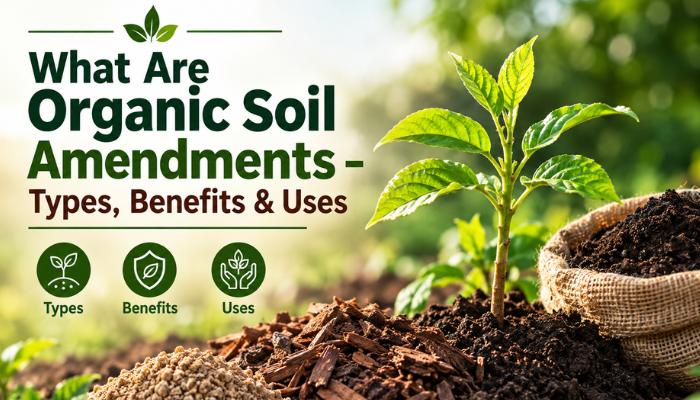
Healthy soil is the base of healthy crop growth. Even good-quality seeds and fertilizers may not give the expected results if the soil is poor. One of the most important parts of healthy soil is organic matter.
Organic soil amendments are natural materials added to the soil to improve its quality, structure, and biological activity. They help the soil hold water, improve nutrient availability, support useful microorganisms, and maintain long-term fertility. For farmers, using organic soil amendments can be a useful way to improve crop growth while maintaining the health of the land.
What Are Organic Soil Amendments?
Organic soil amendments are natural materials made from plant, animal, or microbial sources. They are added to the soil to improve its physical, chemical, and biological properties.
Organic soil amendments are different from fertilizers. Fertilizers mainly provide nutrients to crops, while amendments focus on improving the overall condition of the soil. Some common examples include compost, farmyard manure, green manure, crop residues, vermicompost, and biochar.
These materials may work slowly compared with some chemical inputs, but their benefits can continue for a longer period by improving soil health.
Types of Organic Soil Amendments
Learn about different organic materials used to improve soil quality, fertility, and moisture retention.
1. Compost
- Compost is made from decomposed plant and animal waste.
- It adds organic matter to the soil and helps improve soil structure and water retention.
- It also supports beneficial microorganisms and provides nutrients slowly as it breaks down.
2. Farmyard Manure (FYM)
- Farmyard manure (FYM) is made from animal dung, urine, and bedding materials.
- It contains organic matter and important nutrients such as nitrogen, phosphorus, and potassium.
- Regular use of FYM can increase soil fertility, structure, and moisture-holding capacity. It is one of the most commonly used organic amendments in farming.
3. Green Manure
- Green manure includes fast-growing crops such as sunhemp, dhaincha, and cowpea that are grown and then mixed into the soil.
- These crops add organic matter to the soil.
- Legume-based green manure crops can also help add nitrogen to the soil, supporting better soil fertility.
4. Crop Residues and Mulch
- Crop residues include straw, stalks, leaves, and other plant materials left after harvesting.
- These materials can be incorporated into the soil or used as mulch on the soil surface.
- They help protect the soil from erosion, reduce moisture loss, control weeds, and add organic matter as they decompose.
5. Vermicompost
- Vermicompost is produced when earthworms break down organic waste.
- It contains nutrients and beneficial microorganisms that support healthy soil and plant growth.
- It can improve soil structure, nutrient availability, and moisture retention.
- Vermicompost is especially popular in horticulture and vegetable farming.
6. Biochar
- Biochar is a charcoal-like material made from plant materials under low-oxygen conditions.
- It can improve soil porosity, water retention, and nutrient-holding capacity.
- Biochar also helps store carbon in the soil and can remain in the soil for a long time, making it a useful long-lasting soil amendment.
7. Leaf Mold and Peat Moss
- Leaf mold is made from decomposed leaves and can improve soil structure and moisture retention.
- Peat moss is also used to improve moisture-holding capacity and is commonly used in gardening and horticulture, especially in potting mixes.
8. Animal By-Products
- Animal-based materials such as bone meal, blood meal, feather meal, and fish emulsion can also be used as organic amendments.
- Different materials provide different nutrients.
- For example, bone meal is a source of phosphorus, while blood meal provides nitrogen.
Benefits of Organic Soil Amendments
Understand how organic amendments improve soil health, nutrient availability, water retention, and crop growth.
1. Improves Soil Structure
- Organic soil amendments help improve soil structure and make it easier for plant roots to grow.
- They can make heavy clay soils more loose and workable while helping sandy soils hold more water and nutrients.
2. Enhances Water Retention and Drainage
- Organic matter helps soil hold water for a longer time, which can reduce moisture stress during dry periods.
- At the same time, it can improve drainage in heavy soils and reduce the risk of waterlogging.
3. Supplies Slow-Release Nutrients
- Organic amendments release nutrients slowly as they decompose.
- This provides a steady supply of nutrients to plants and can reduce nutrient loss through leaching.
4. Boosts Soil Microbial Activity
- Organic materials provide food for useful soil microorganisms such as bacteria and fungi.
- They also support earthworm activity.
- These organisms help break down organic matter and improve nutrient cycling in the soil.
5. Increases Soil Organic Carbon
- Regular use of organic amendments can increase soil organic carbon and improve long-term soil health.
- Some amendments, such as biochar, can also help store carbon in the soil for longer periods.
6. Reduces Soil Erosion
- Healthy soil with good structure is less likely to be washed away by rain or blown away by wind.
- Crop residues and mulch also provide surface protection and help reduce soil erosion.
7. Improves Nutrient Holding Capacity
- Organic matter can improve the soil's cation exchange capacity (CEC).
- This helps the soil hold important nutrients and make them available to plants.
- Over time, better nutrient-holding capacity can help reduce the need for excessive fertilizer application.
8. Suppresses Soil-Borne Diseases
- Organic amendments can support beneficial microorganisms that compete with harmful soil pathogens.
- A healthier soil microbial community may help reduce the impact of some soil-borne diseases and lower dependence on chemical pesticides.
How to Use Organic Soil Amendments
Learn the right methods, timing, quantity, and practices for applying organic soil amendments effectively.
1. Start With Soil Testing
- Test the soil for organic matter and nutrient levels.
- Use the results to choose the right amendment and quantity.
2. Choose the Right Time
- Apply amendments before sowing or transplanting.
- They can also be used during fallow periods or as mulch during crop growth.
3. Use the Right Application Method
- Broadcasting: Spread evenly and mix with the topsoil.
- Banding: Apply in rows near seeds or plant roots.
- Mulching: Cover the soil surface to retain moisture and control weeds.
- Incorporation: Mix amendments into the soil during land preparation.
4. Follow the Right Quantity and Frequency
- Apply around 5-10 tonnes of compost or FYM per hectare for field crops, based on soil and crop needs.
- For gardens, apply a 2-5 cm layer of compost or mulch annually.
- Reapply every 1-3 years depending on soil condition and amendment type.
5. Combine With Other Soil Practices
- Use organic soil amendments with crop rotation and green manuring.
- Combine them with reduced tillage and balanced fertilizers for better soil fertility and crop growth.
Best Practices for Using Organic Soil Amendments
- Use well-decomposed compost and manure to reduce the risk of weed seeds and harmful pathogens.
- Avoid applying fresh manure directly to edible crops because it may cause contamination.
- Store organic amendments properly to reduce nutrient loss.
- Use different types of amendments when suitable to provide a wider range of benefits.
- Test the soil regularly to monitor changes in soil health.
- Follow recommended application rates instead of applying large quantities at once.
- Make sure the amendment is suitable for the crop and soil type.
Conclusion
Organic soil amendments are an important part of maintaining healthy and productive soil. Materials such as compost, FYM, green manure, vermicompost, crop residues, and biochar can improve soil structure, water retention, nutrient availability, and microbial activity.
Want to improve your crop nutrition and yield? Are your crops getting the nutrients they need for healthy and productive growth? SV Agro Solutions provides quality fertilizer solutions designed to support crop nutrition, improve plant growth, and help farmers achieve better results. As a trusted fertilizer manufacturer in Pune, we focus on quality, research, and solutions suitable for different crop and soil requirements
FAQs
1. What are organic soil amendments?
Organic soil amendments are natural materials like compost, manure, green manure, and crop residues that improve soil structure, fertility, and biological activity.
2. How do organic soil amendments benefit crops?
They improve soil structure, water retention, nutrient availability, and microbial activity, supporting healthier crop growth.
3. Which organic amendment is best for sandy soil?
Compost, FYM, and biochar are useful for sandy soil because they improve water and nutrient retention.
4. Can organic amendments replace chemical fertilizers?
Organic amendments improve soil health, but combining them with balanced fertilizers can provide better nutrient management for high-yield farming.
5. How often should I apply organic soil amendments?
Organic soil amendments can generally be applied every 1-3 years based on soil condition, crop needs, and amendment type.