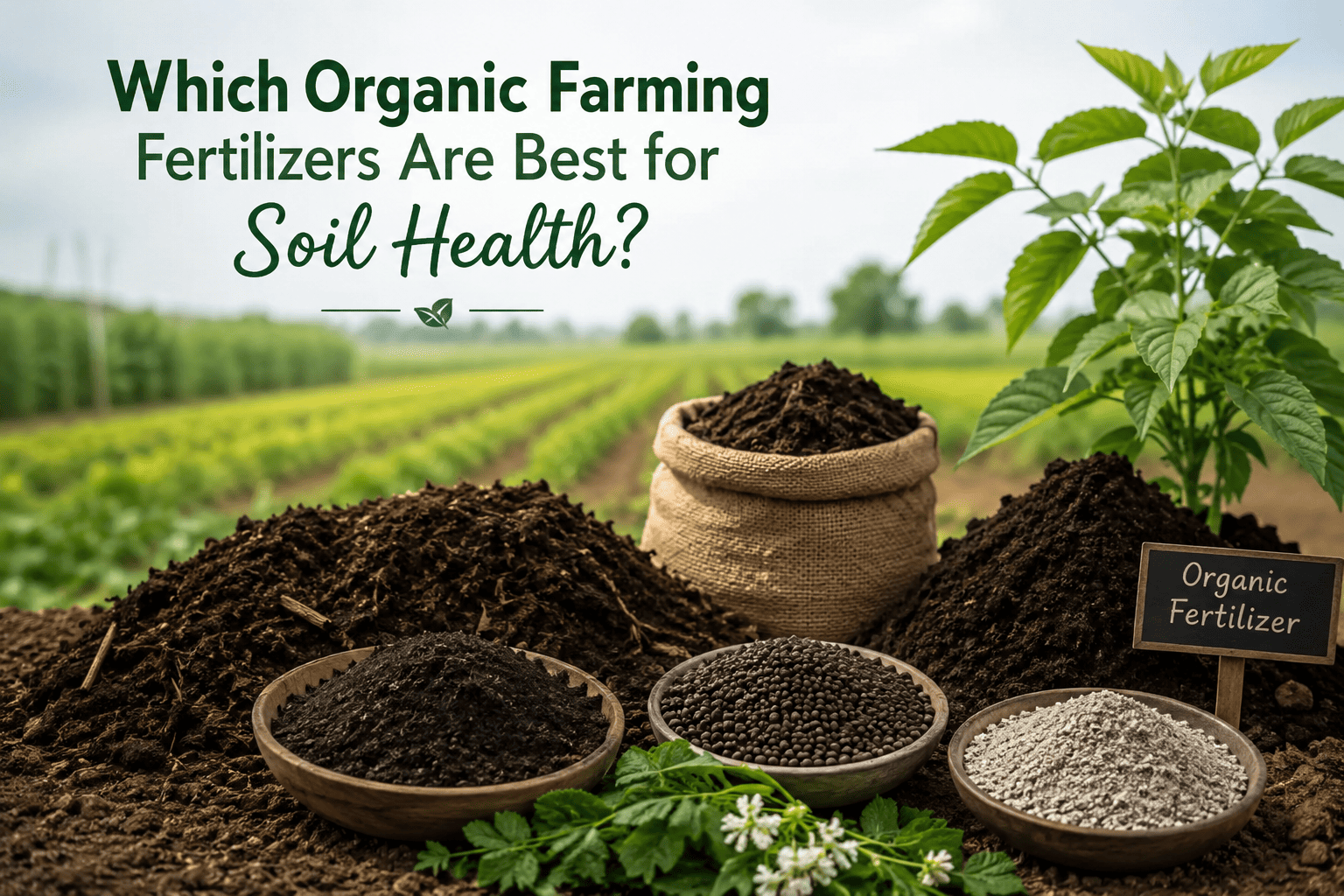
Modern farming is changing as more farmers focus on improving soil health naturally. Continuous use of chemical fertilizers can reduce soil fertility, damage beneficial microbes, and lower long-term productivity. Because of this, many farmers are now using organic farming fertilizers to keep the soil healthy and productive.
Organic fertilizers are natural nutrient sources made from plant, animal, or mineral materials. They help improve soil fertility, soil structure, water-holding capacity, and soil biology over time. Unlike chemical fertilizers, they not only feed crops but also improve the overall health of the soil.
In this guide, we’ll compare the best organic farming fertilizers and explain how to choose the right one for healthier soil and better crop yields.
What are Organic Farming Fertilizers?
Organic farming fertilizers are natural substances used to improve soil fertility and support plant growth. These fertilizers are made from plant waste, animal waste, beneficial microbes, or natural minerals.
They help provide nutrients slowly while improving soil health naturally. Organic fertilizers feed both plants and soil, making them important for sustainable farming.
Why Soil Health Improves with Organic Inputs?
Organic fertilizers improve soil structure and increase humus content in the soil. They help soil become loose and fertile, allowing roots to grow deeper and absorb nutrients better.
They also increase microbial activity, improve moisture retention, and support long-term soil productivity.
Best Organic Fertilizers for Soil Health
Improve your soil naturally with the best organic fertilizers that increase fertility, improve plant growth, and support long-term soil health.
Compost
Compost is one of the best organic fertilizers for improving soil health. It is made from decomposed plant waste, kitchen waste, leaves, and crop residues.
Benefits of compost:
- Improves soil texture
- Increases moisture retention
- Supports beneficial microbes
- Improves root growth
- Reduces soil erosion
Vermicompost
Vermicompost is prepared using earthworms that convert organic waste into nutrient-rich compost.
Benefits of vermicompost:
- Rich in nutrients and beneficial microbes
- Improves soil fertility naturally
- Increases plant growth
- Improves soil aeration
- Helps increase crop yield and quality
Farmyard Manure (FYM)
Farmyard manure is made from cow dung, urine, bedding material, and farm waste.
Benefits of FYM:
- Adds organic matter to the soil
- Improves long-term soil fertility
- Enhances water-holding capacity
- Improves microbial activity
- Supports healthy plant growth
Neem Cake
Neem cake is made from neem seed residue after oil extraction.
Benefits of neem cake:
- Improves soil fertility
- Supports root zone health
- Helps reduce harmful soil pests
- Improves nitrogen efficiency
- Supports eco-friendly farming
Bone Meal
Bone meal is an organic fertilizer rich in phosphorus and calcium.
Benefits of bone meal:
- Supports strong root development
- Improves flowering and fruiting
- Helps seed and fruit formation
- Useful for vegetable and fruit crops
Seaweed Extract
Seaweed extract is a natural plant-based supplement used in organic farming.
Benefits of seaweed extract:
- Improves crop stress tolerance
- Enhances nutrient absorption
- Supports root and shoot growth
- Improves plant vitality
Biofertilizers
Biofertilizers contain beneficial microorganisms like Azospirillum, Rhizobium, Azotobacter, and phosphate-solubilizing bacteria that naturally improve nutrient availability and soil fertility.
Benefits:
- Improve soil microbial activity
- Increase nutrient uptake
- Improve soil fertility naturally
- Reduce dependence on chemical fertilizers
Types of Organic Fertilizers
Organic fertilizers come in various types, including compost, manure, bone meal, seaweed, and biofertilizers, each helping improve soil fertility and plant growth naturally.
Plant-Based Fertilizers
Plant-based fertilizers are made from natural plant materials like compost, leaf mold, crop residues, seaweed products, and plant meals that help improve soil fertility and organic matter naturally.
Animal-Based Fertilizers
Animal-based fertilizers are prepared from animal waste and by-products like farmyard manure, poultry manure, bone meal, and blood meal that provide essential nutrients for healthy crop growth.
Mineral Amendments
Mineral amendments are natural mineral sources like rock phosphate, rock dust, lime minerals, and gypsum that help restore trace nutrients and improve soil quality.
How Organic Fertilizers Improve Soil Health?
Organic fertilizers improve soil health by enriching the soil with natural nutrients, enhancing microbial activity, and improving soil structure for long-term crop productivity.
Boosts Microbial Activity
Organic fertilizers increase useful microbes like bacteria, fungi, and earthworms in the soil. These microbes help break down nutrients and improve soil health naturally.
Enhances Soil Structure
They improve soil structure by making the soil loose and well-aerated. This helps plant roots grow deeper and absorb water and nutrients more easily.
Improves Water Retention
Organic matter helps soil hold moisture for a longer time, reducing water stress and lowering the need for frequent irrigation during dry conditions.
Provides Slow, Steady Nutrient Release
Organic fertilizers release nutrients slowly and steadily, providing long-term nourishment to crops without damaging plants or causing nutrient loss.
Balances Soil pH and Prevents Erosion
They help maintain balanced soil pH levels and reduce soil erosion by improving soil strength and preventing topsoil from washing or blowing away.
Best Organic Fertilizer for Soil Health
Improve your crop growth with Mr. Micro - G from SV Agro, an advanced micronutrient solution developed using India’s first SRF (Slow Release Fertilizer) Technology for long-lasting and effective plant nutrition.
Why Choose Mr. Micro - G?
- Developed with advanced Slow Release Fertilizer Technology for gradual and efficient nutrient availability.
- Suitable for all types of crops and farming conditions.
- Prevents nutrient loss through leaching, ensuring better nutrient retention in the soil.
- Its unique nano polymer coating prevents nutrient fixation with other soil elements.
- Provides crops with a controlled nutrient supply for 90 to 120 days during critical growth stages.
- Performs effectively in different soil types and varying soil pH conditions.
- Supports healthy crop development without causing any harmful effects on soil health or soil properties.
Choose Mr. Micro - G by SV Agro for smarter farming, healthier soil, and better yields.
Conclusion
Organic farming fertilizers play an important role in improving soil biology, soil structure, and nutrient balance naturally. They help farmers maintain long-term soil fertility while supporting healthy crop growth and sustainable farming.
The best organic fertilizer depends on soil condition, crop requirement, and farming goals. Farmers should combine soil testing, proper fertilizer selection, composting practices, and balanced nutrient management to build healthier soil and achieve better long-term yields.
Frequently Asked Questions
1. What are Organic Farming Fertilizers?
Organic farming fertilizers are natural fertilizers made from plant, animal, or mineral sources that improve soil fertility and crop growth.
2. Which organic fertilizer is best for soil health?
Compost and vermicompost are considered among the best fertilizers for improving overall soil health.
3. Is vermicompost better than compost?
Vermicompost is usually richer in nutrients and beneficial microbes, but both are useful for soil improvement.
4. Can organic fertilizers replace chemical fertilizers completely?
Yes, with proper nutrient management and soil care, organic fertilizers can reduce or replace chemical fertilizer use over time.
5. How often should organic fertilizers be applied?
Application depends on crop type and soil condition, but regular seasonal use gives better results.
6. Do biofertilizers improve soil health?
Yes, biofertilizers increase beneficial microbial activity and improve nutrient availability naturally.