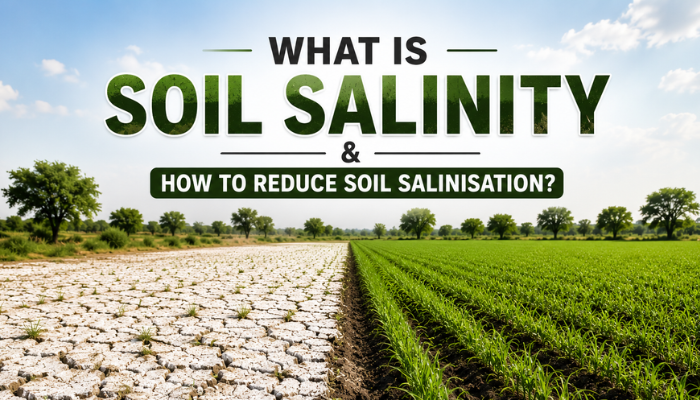
Healthy soil helps crops absorb water and nutrients, resulting in better growth and higher yields. However, one major problem affecting agricultural land in many regions is soil salinity.
Soil salinity occurs when excess salts accumulate in the soil. High salt levels can reduce plant growth, decrease water absorption, damage soil structure, and lower crop productivity. If left unmanaged, salinity can make farmland less productive over time.
Understanding what is soil salinity, its causes, effects, and management methods can help farmers protect their soil and maintain long-term agricultural productivity.
What is Soil Salinity?
Soil salinity is the accumulation of soluble salts in the root zone of the soil. These salts may include sodium, calcium, magnesium, and potassium compounds. When salt levels become too high, plants struggle to absorb water and nutrients properly. As a result, crop growth slows down and yields decrease.
The buildup of salts in soil is called soil salinization. It develops gradually and can become a serious problem if not identified and managed early.
In simple words, soil salinity means that the soil contains too much salt for healthy crop growth.
What Causes Soil Salinity?
Soil salinity can develop due to both natural and human-related factors.
Human Causes
- Using salty irrigation water can increase salt buildup in the soil.
- Over-irrigation and poor drainage can cause waterlogging and salt accumulation.
- Excessive use of chemical fertilizers may raise soil salt levels.
- Continuous irrigation without proper drainage speeds up soil salinization.
Natural Causes
- Some soils naturally contain salts from rocks and minerals.
- Dry climates with high evaporation leave salts behind in the soil.
- Low rainfall prevents salts from being washed away.
- Seawater intrusion in coastal areas can increase soil salinity.
How to Reduce Salinity in Soil?
Managing salinity requires a combination of soil improvement and proper water management.
Leaching Salts from the Soil
- Apply fresh water to the field to wash excess salts below the plant root zone.
- This helps reduce salt concentration around crop roots.
Improve Drainage
- Maintain proper drainage so salts can move out of the soil.
- Good drainage prevents waterlogging and salt accumulation.
Apply Gypsum
- Use gypsum in salt-affected soils to reduce sodium levels.
- It improves soil structure and helps roots grow better.
Add Organic Matter
- Add compost, manure, or crop residues to improve soil health.
- Organic matter improves water movement and supports beneficial microbes.
Reduce Water Evaporation
- Use mulch or crop residues to cover the soil surface.
- This helps retain moisture and prevents salts from rising to the topsoil.
Grow Salt-Tolerant Crops
- Grow crops such as barley, alfalfa, or cotton in saline soils.
- These crops can perform better in areas affected by salinity.
Avoid Excessive Chemical Fertilizers
- Use fertilizers carefully to prevent additional salt buildup.
- Organic fertilizers can help improve soil health naturally.
Follow Proper Irrigation Practices
- Avoid over-irrigation and waterlogging.
- Apply the right amount of water at the right time to reduce salinity problems.
Types of Soil Salinity
There are two main types of Soil Salinity
Primary Soil Salinity (Natural Salinity)
- Occurs naturally due to climate and soil conditions.
- Common in dry and semi-arid regions where evaporation is higher than rainfall.
- Salts build up in the soil over many years from rocks and minerals.
- Coastal winds can also carry salt particles inland and increase soil salinity.
Secondary Soil Salinity (Human-Induced Salinity)
- Caused by farming and land management practices.
- Over-irrigation and poor drainage can lead to salt accumulation in the root zone.
- Using saline irrigation water increases soil salt levels.
Soil Salinity Solutions for Farmers
Several practical solutions can help farmers manage soil salinity effectively.
Leaching and Drainage
- Apply fresh water to the field to wash excess salts below the root zone.
- Maintain proper drainage so salty water can move out of the field easily.
Use Gypsum and Organic Matter
- Apply gypsum to reduce sodium levels and improve soil structure.
- Add compost, manure, or other organic matter to improve water movement and soil health.
Improve Irrigation Practices
- Use drip irrigation to supply water directly to plant roots.
- Avoid over-irrigation and waterlogging to prevent salt buildup.
Grow Salt-Tolerant Crops
- Grow salt-tolerant crops such as barley, cotton, and sugar beet in affected areas.
- Follow crop rotation to improve soil health and maintain productivity.
Monitor Soil Regularly
- Test soil regularly to check salinity levels.
- Take corrective measures early to prevent long-term soil damage.
Conclusion
Understanding soil salinisation is the first step toward protecting farmland and improving crop production. Soil salinity occurs when excess salts accumulate in the soil, making it difficult for plants to absorb water and nutrients.
Looking for solutions to improve soil health and crop performance?
SV Agro Solutions provides high-quality fertilizers, biostimulants, and soil improvement products that help farmers maintain healthy soil and achieve better crop yields. Our products are designed to support sustainable farming practices and improve long-term agricultural productivity across different crops and farming conditions.
FAQs
1. Which fertilizer causes soil salinity?
Excessive use of salt-based chemical fertilizers can increase soil salinity over time.
2. What is a solution to prevent soil salinization?
Proper irrigation, good drainage, and regular soil management help prevent soil salinization.
3. Which vegetable is most tolerant of salt?
Spinach, beetroot, turnip, and cabbage-family vegetables are highly tolerant of salty soils.
4. What is the best way to flush salts from the soil?
Apply fresh water and ensure proper drainage to wash salts below the plant root zone.