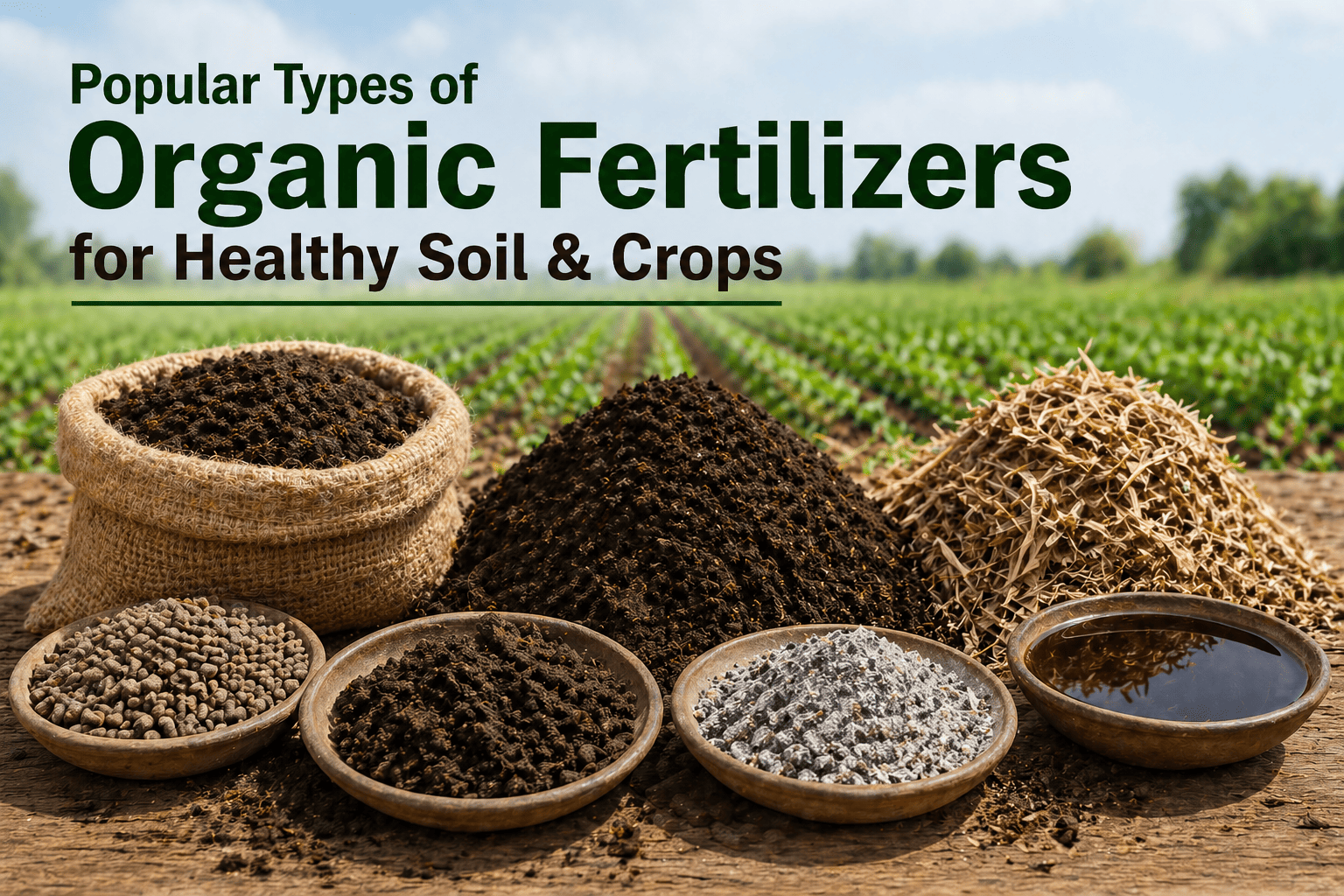
Healthy crops need proper nutrition, and one of the best natural ways to feed plants is by using organic fertilizers. Understanding the types of organic fertilizers is important for farmers because they help improve crop growth and protect soil health.
Organic fertilizers are natural sources of nutrients that support sustainable farming. They not only supply essential nutrients to plants but also improve soil fertility, increase microbial activity, and make the soil healthier over time.
There are three main types of organic fertilizers: plant-based fertilizers, animal-based fertilizers, and mineral amendments.
What are Organic Fertilizers?
Organic fertilizers are natural fertilizers made from plant or animal materials. They break down naturally in the soil and release nutrients slowly for plant use.
These fertilizers:
- Supply essential nutrients to crops
- Improve soil structure
- Support beneficial soil microbes
- Increase organic matter in soil
One major benefit of organic fertilizers is slow nutrient release. This gives plants a steady supply of nutrients over time.
Main Types of Organic Fertilizers
There are three main types of organic fertilizers: plant-based, animal-based, and mineral-based fertilizers that provide natural nutrients while improving soil fertility and plant growth.
1. Plant-Based Organic Fertilizers
Some organic fertilizers are made from plant materials and are used to provide natural nutrients to crops. They improve plant growth as well as soil health. These fertilizers break down slowly in the soil and release nutrients over time.
Compost / Leaf Mold
- Compost and leaf mold are made when leaves, food waste, and plant materials break down naturally over time.
- They improve soil by making it soft, loose, and rich. This helps plant roots grow deeper and stronger.
- They also help the soil hold more water and nutrients, which supports healthy crop growth for a long time.
Wood Ash
- Wood ash is the leftover powder after burning wood.
- It is rich in potassium, which helps plants grow stronger and produce better fruits and flowers.
- It also reduces soil acidity, making the soil more balanced for plant growth.
- But it should be used carefully in small amounts to avoid harming the soil.
Liquid Fertilizers
- Liquid fertilizers are nutrients mixed in water and applied to plants.
- Plants absorb them very quickly through roots or leaves.
- They are useful when crops need fast nutrition, especially during growth, flowering, or stress periods.
- They are often sprayed on leaves for quick and effective results.
2. Animal-Based Organic Fertilizers
Animal-based fertilizers come from animal waste or by-products and are rich in nutrients. They are widely used to improve soil fertility and increase crop productivity.
- Animal-based organic fertilizers are made from animal waste and by-products like manure, bone meal, and blood meal.
- They are rich in important nutrients such as nitrogen, phosphorus, and potassium, which help plants grow well.
- These fertilizers improve soil health by adding organic matter and making the soil more fertile.
- They release nutrients slowly, so plants get a steady supply over time.
- They increase beneficial microbial activity in the soil, which supports plant growth.
- They are an eco-friendly option and reduce the need for chemical fertilizers.
3. Mineral and Natural Amendments
Mineral and natural amendments are fertilizers made from natural minerals and rocks found in the soil.
- They are not made from plants or animals but come from mined materials like rock dust.
- These materials are ground into a fine powder so plants can absorb nutrients easily.
- They help improve soil health and increase soil fertility naturally.
- They release nutrients slowly, giving plants a steady supply over a long time.
- They provide important nutrients and trace minerals needed for plant growth.
- They improve soil structure, making it easier for roots to grow.
- They help the soil hold water better and reduce water loss.
- They support beneficial soil microbes, which improve overall soil quality.
Innovative Agricultural Inputs for Healthy Crop Growth
SV Agro Solutions, a trusted Fertilizer Company in Pune, offers high-quality biostimulants, fertilizers, and micronutrients to improve soil fertility, boost plant growth, and support sustainable farming.
Biostimulants
Biostimulants help plants grow stronger by improving their natural processes rather than simply adding nutrients.
They help:
- Improve nutrient absorption and root growth
- Increase resistance to drought, heat, and pests
- Support better flowering, fruiting, and crop quality
- Promote balanced growth and higher productivity
Fertilizers
Fertilizers supply essential nutrients needed for healthy crop growth and better yields.
They provide:
- Nitrogen (N) for leafy growth
- Phosphorus (P) for roots and flowering
- Potassium (K) for plant strength and quality
Micronutrients
Micronutrients are needed in small amounts but are important for plant health and crop quality.
They help:
- Improve photosynthesis and plant metabolism
- Support balanced nutrition
- Increase crop resilience to stress
- Prevent nutrient deficiency problems
Common micronutrients include zinc, iron, boron, manganese, and copper.
With innovative crop nutrition solutions, SV Agro Solutions helps farmers improve productivity, soil health, and long-term farming success.
Conclusion
Understanding the types of organic fertilizers helps farmers choose the right nutrient source for healthy crops and fertile soil. Whether it is compost, manure, plant meals, or natural mineral amendments, each has an important role in sustainable farming.
Want to improve crop health, soil fertility, and farm productivity with the right nutrition solutions? Contact SV Agro Solutions today for expert guidance and product support. For more information, get in touch with us. Call +91 9637781012 or email us at info@svagrosolutions.com.
FAQS
1. What are the top 3 fertilizers?
The top three plant nutrients in fertilizers are nitrogen (N), phosphorus (P), and potassium (K), which support growth, roots, and plant strength.
2. What are the big three types of fertilizers?
The three main types of fertilizers are organic fertilizers, chemical (synthetic) fertilizers, and hybrid fertilizers.
3. What is the most common type of fertilizer used in organic farming?
Compost and animal manure are the most common fertilizers used in organic farming.
4. What is the golden ratio of fertilizer?
The golden fertilizer ratio is 3-1-2, meaning three parts nitrogen, one part phosphorus, and two parts potassium.