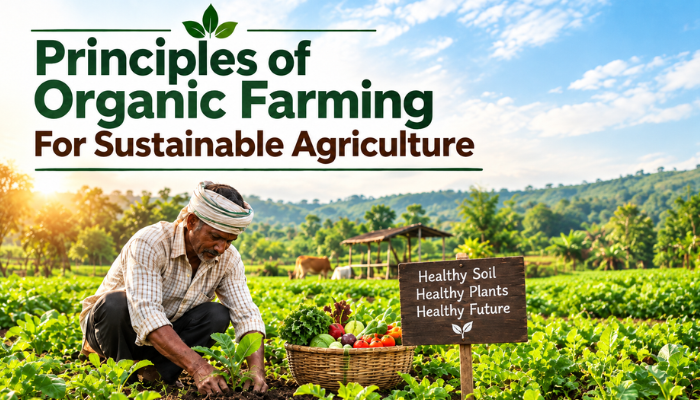
Organic farming is not only about avoiding chemical fertilizers and pesticides. It is a complete farming system that focuses on healthy soil, natural farming cycles, biodiversity, proper use of resources, and animal welfare.
The Principles of Organic Farming are based on four main foundations: Health, Ecology, Fairness, and Care. These principles help farmers grow safe food while protecting soil, water, animals, people, and the environment. They also help keep farms productive for future generations.
What is Organic Farming?
Organic farming works with natural processes and reduces dependence on synthetic inputs. Common organic farming practices include:
- Using compost and farmyard manure.
- Practising crop rotation and mixed cropping.
- Using green manure and cover crops.
- Managing pests through natural and biological methods.
- Recycling crop residues and animal waste.
- Protecting soil, water, and beneficial organisms.
The main goal of organic farming is to maintain soil fertility, biodiversity, and the health of crops, animals, and people. It focuses on the overall health of the farm rather than only increasing production for one season.
The Four Principles of Organic Farming
The four principles of organic farming are Health, Ecology, Fairness, and Care guide farmers in maintaining healthy soil, protecting nature, and practising sustainable farming.
1. Principle of Health
- The Principle of Health focuses on maintaining and improving the health of soil, plants, animals, people, and the environment.
- Healthy soil helps crops grow well, while healthy crops provide better food for people and animals.
Farmers can follow this principle by:
- Adding compost, manure, and organic matter to the soil.
- Using healthy seeds and planting materials.
- Avoiding harmful chemical residues.
- Providing proper feed, water, shelter, and care to animals.
- Following safe working practices.
- Producing safe and nutritious food.
For example, compost improves soil structure and supports beneficial microorganisms, helping crops develop stronger roots and absorb nutrients better.
2. Principle of Ecology
- The Principle of Ecology means farming in harmony with nature and supporting natural ecosystems.
- Soil organisms, insects, birds, trees, water, and crops all work together.
- Biodiversity helps control pests naturally.
- Crop rotation also helps improve nutrient cycling and reduces pest and disease problems.
- Farm resources should also be reused wherever possible.
For example, animal waste can be used to make compost, and crop residues can be returned to the soil instead of being burned.
Farmers can support this natural balance through:
- Crop rotation.
- Mixed cropping and intercropping.
- Green manuring.
- Recycling crop residues.
- Biological pest control.
- Protecting trees, hedges, ponds, and natural habitats.
3. Principle of Fairness
- The Principle of Fairness promotes fair and respectful treatment of farmers, workers, animals, consumers, and the environment.
Fairness includes:
- Fair prices and income for farmers.
- Safe working conditions for workers.
- Proper care and welfare of animals.
- Access to safe and nutritious food.
- Responsible use of land, water, and other resources,
Farmers should use natural resources responsibly so that soil and water remain available for neighbouring communities and future generations.
4. Principle of Care
- The Principle of Care means managing the farm carefully and responsibly to protect people, animals, soil, water, and the environment.
- Before using a new product or farming method, farmers should consider its possible effects.
Some useful practices include:
- Testing soil before applying amendments.
- Using safe and approved farm inputs.
- Protecting wells, ponds, and rivers from pollution.
- Monitoring pests and diseases regularly.
- Using water and organic resources carefully.
- Avoiding practices that can harm people, animals, or the environment.
For example, farmers should take steps to prevent soil erosion before valuable topsoil is lost.
Important Practices Based on Organic Farming Principles
Learn the key farming practices that support healthy soil, crops, and sustainable agriculture.
Soil Fertility Management
- Farmers can maintain soil fertility by using compost, farmyard manure, vermicompost, and green manure.
- These materials add organic matter and support beneficial microorganisms.
- Crop rotation, especially with legumes, also helps improve soil health and nutrient management.
Natural Pest and Disease Management
Organic farming uses natural methods to manage pests and diseases, such as:
- Growing resistant crop varieties.
- Using healthy seeds.
- Encouraging beneficial insects and natural predators.
- Using traps, barriers, botanical products, and biological control.
- Maintaining field hygiene and crop diversity.
Preventing pest problems is better than trying to control a major pest attack later.
Biodiversity Conservation
- Growing different crops instead of depending on one crop can improve biodiversity and reduce farming risks.
- Trees, hedges, flowering plants, and ponds can provide food and shelter for pollinators, birds, earthworms, and beneficial insects.
Recycling Farm Resources
- Crop residues can be returned to the soil or used for composting. Animal waste can be converted into manure.
- Reusing farm resources helps reduce waste and dependence on outside inputs.
Responsible Water and Land Management
Farmers can protect soil and water through:
- Mulching.
- Cover crops.
- Field bunds.
- Contour farming.
- Terracing on slopes.
- Efficient irrigation.
Drip irrigation and proper irrigation scheduling can help save water. Farmers should also prevent manure and other farm inputs from entering ponds, wells, and groundwater.
Benefits of Following Organic Farming Principles
Following the Principles of Organic Farming can help farmers:
- Improve soil fertility and soil structure.
- Support beneficial soil organisms and biodiversity.
- Reduce dependence on synthetic fertilizers and pesticides.
- Improve water retention and reduce soil erosion.
- Support animal welfare and safer working conditions.
- Build farms that can better handle changing weather conditions.
- Support long-term food production and sustainable income.
How Farmers Can Apply These Principles
Farmers can start with simple steps:
- Test the soil and understand available farm resources.
- Add compost, manure, and crop residues regularly.
- Include legumes in crop rotation.
- Practise mixed cropping and use cover crops.
- Protect beneficial insects and natural predators.
- Avoid burning crop residues.
- Prevent soil erosion and water pollution.
- Maintain records of farm inputs and activities.
- Use approved inputs when the farm is certified organic.
- Improve farming practices step by step.
Conclusion
The Principles of Organic Farming are based on four foundations: Health, Ecology, Fairness, and Care. These principles help farmers protect soil, support biodiversity, care for animals and people, and use natural resources responsibly.
Looking for the Right Fertilizer for Better Crop Growth? SV Agro Solutions offers quality fertilizer products designed to support healthy plant growth, balanced nutrition, and better crop productivity. As a trusted Fertilizer manufacturer in Pune, we provide reliable solutions developed according to crop and farming needs.
Choose SV Agro Solutions for quality fertilizers that support healthier crops, improved soil health, and sustainable farming.
FAQs
1. What are the four principles of organic farming?
The four principles are Health, Ecology, Fairness, and Care. They support the health of soil, plants, animals, people, and the environment.
2. What is the Principle of Health in organic farming?
It focuses on maintaining and improving the health of soil, plants, animals, people, and the planet as one connected system.
3. How does organic farming follow the Principle of Ecology?
It works with natural cycles through crop rotation, biodiversity, composting, recycling, green manuring, and biological pest control.
4. Why is fairness important in organic farming?
Fairness ensures respectful and responsible treatment of farmers, workers, consumers, animals, communities, and the environment.
5. What does the Principle of Care mean?
The Principle of Care means managing farms responsibly and taking precautions to protect people, animals, natural resources, and future generations.