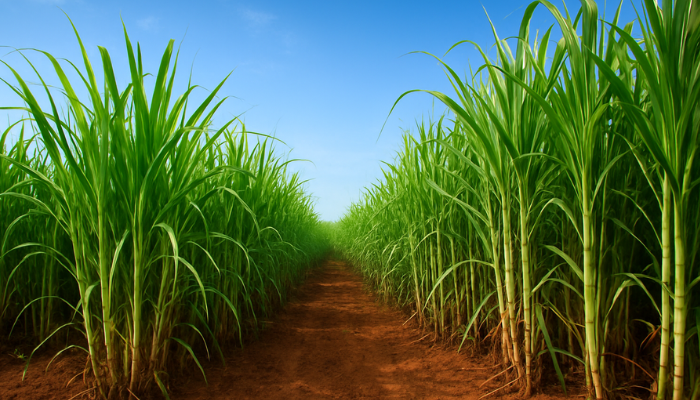
Sugarcane is one of the most important crops grown in India. It provides farmers with good income, especially in Maharashtra, Uttar Pradesh, and Karnataka. From jaggery to sugar and ethanol, sugarcane plays a big role in our daily life and in the country’s economy.
To get a healthy crop and higher sugar recovery, using the right fertilizer at the right time is very important. Many farmers often ask, “What is the best fertilizer for sugarcane?” The answer depends on your soil condition, the variety of sugarcane you grow, and the type of fertilizer you use.
In this guide, you will learn about the nutrients required for sugarcane, the optimal fertiliser schedule, and how using SV Sugarban can help you increase yield and improve soil health naturally.
Fertilizer for Sugarcane
Sugarcane is a crop that grows for a long time and needs a large amount of nutrients from the soil. To get a good harvest with higher sugar content, farmers must use the right type of fertilizer in the right quantity and at the right time.
Fertilizers provide the essential nutrients that sugarcane plants need for healthy growth. The three major nutrients are Nitrogen (N), Phosphorus (P), and Potassium (K), often called NPK. Each of these nutrients plays an important role in the crop’s development:
- Nitrogen (N): Helps in leaf and stem growth. It makes the plant green and increases the number of tillers.
- Phosphorus (P): Promotes strong root development and early crop establishment.
- Potassium (K): Improves sugar content, juice quality, and resistance to pests and diseases.
In addition to these, sugarcane also needs secondary nutrients (Calcium, Magnesium, Sulphur) and micronutrients (Zinc, Iron, Manganese, Boron). Lack of these nutrients can lead to weak growth and low sugar recovery.
To maintain soil fertility and achieve high yield, it is best to follow an integrated approach using organic manure, chemical fertilizers, and bio or plant booster fertilizers together. This ensures balanced nutrition, better soil health, and sustainable farming.
Why Fertilizer Important in Sugarcane Farming?
Sugarcane needs a lot of nutrients to grow tall, strong, and produce more juice. It is called a heavy feeder crop because it takes large amounts of nitrogen, phosphorus, and potassium from the soil. If these nutrients are not replaced through fertilisers, the soil becomes weak, and the crop yield goes down year after year.
Using the right type and quantity of fertiliser helps the crop in many ways:
- Better Growth: Fertilizer provides nitrogen for healthy leaves and stalks.
- Stronger Roots: Phosphorus helps the roots grow deep and absorb more water and nutrients.
- More Sugar: Potassium increases sugar content in the cane and improves juice quality.
- Improved Soil Health: Balanced use of organic and biofertilizers keeps the soil fertile for future crops.
Without proper fertilizer management, even good-quality sugarcane varieties may not give expected yields. That’s why every farmer should follow a balanced fertilizer plan suited to their soil type and region.
Fertilizer Dose for Sugarcane
Applying the right amount of fertilizer at the right time is the key to getting a high yield and good sugar recovery. The dose of fertilizer depends on the soil fertility, variety of sugarcane, and irrigation method. However, the general recommendation for Indian conditions, especially for Maharashtra, is as follows:
|
Crop Stage |
Time After Planting |
Recommended Fertilizer Dose (per acre) |
|
Land Preparation |
Before planting |
2 tons of farmyard manure (FYM) or compost + 50 kg Single Super Phosphate (SSP) |
|
Early Growth Stage |
30–45 days after planting |
50 kg Urea + 25 kg Muriate of Potash (MOP) |
|
Tillering Stage |
60–90 days after planting |
100 kg Urea + 25 kg MOP |
|
Grand Growth Stage |
120–180 days after planting |
50 kg Urea + 20 kg SSP + 25 kg MOP |
|
Maturity Stage |
After 6 months |
Foliar spray of micronutrient mixture or plant booster such as SV Sugarban |
SV Agro Solutions is a trusted name in plant nutrition and crop care, offering advanced agricultural products designed for Indian farmers. Their SV Sugarban Plant Booster enhances sugarcane yield, improves soil health, and helps farmers achieve better returns with fewer inputs.
Sugarcane productivity depends on balanced fertilizer use, soil health, and good agronomic practices.
By combining organic, chemical, and bio-booster fertilizers, farmers can achieve higher yields and better sugar recovery.
For those seeking a reliable fertilizer for sugarcane, explore SV Sugarban by SV Agro Solutions. It supports sustainable farming and long-term soil health.
FAQ
1. What's the best fertilizer for sugarcane?
The best fertilizer for sugarcane is a balanced NPK fertilizer like NPK 18-46-0, 19-19-19, or 20-10-10, along with urea (nitrogen) and potash for strong cane growth and sugar content.
2. What is the fertilizer for sugarcane?
Sugarcane mainly needs Nitrogen (N) for growth, Phosphorus (P) for root development, and Potassium (K) for sugar formation. Common fertilizers include Urea, DAP, MOP, and NPK blends.
3. When to apply fertilizer on sugarcane?
Apply fertilizer in three stages:
- Basal dose: at planting
- 1st top dressing: 30–45 days after planting
- 2nd top dressing: 60–90 days after planting
These timings support strong early growth and cane tillering.
4. How to increase sugarcane growth?
To increase sugarcane growth:
- Use high-yield varieties
- Apply balanced fertilizers
- Ensure proper irrigation
- Use organic manure
- Maintain weed control and timely earthing-up