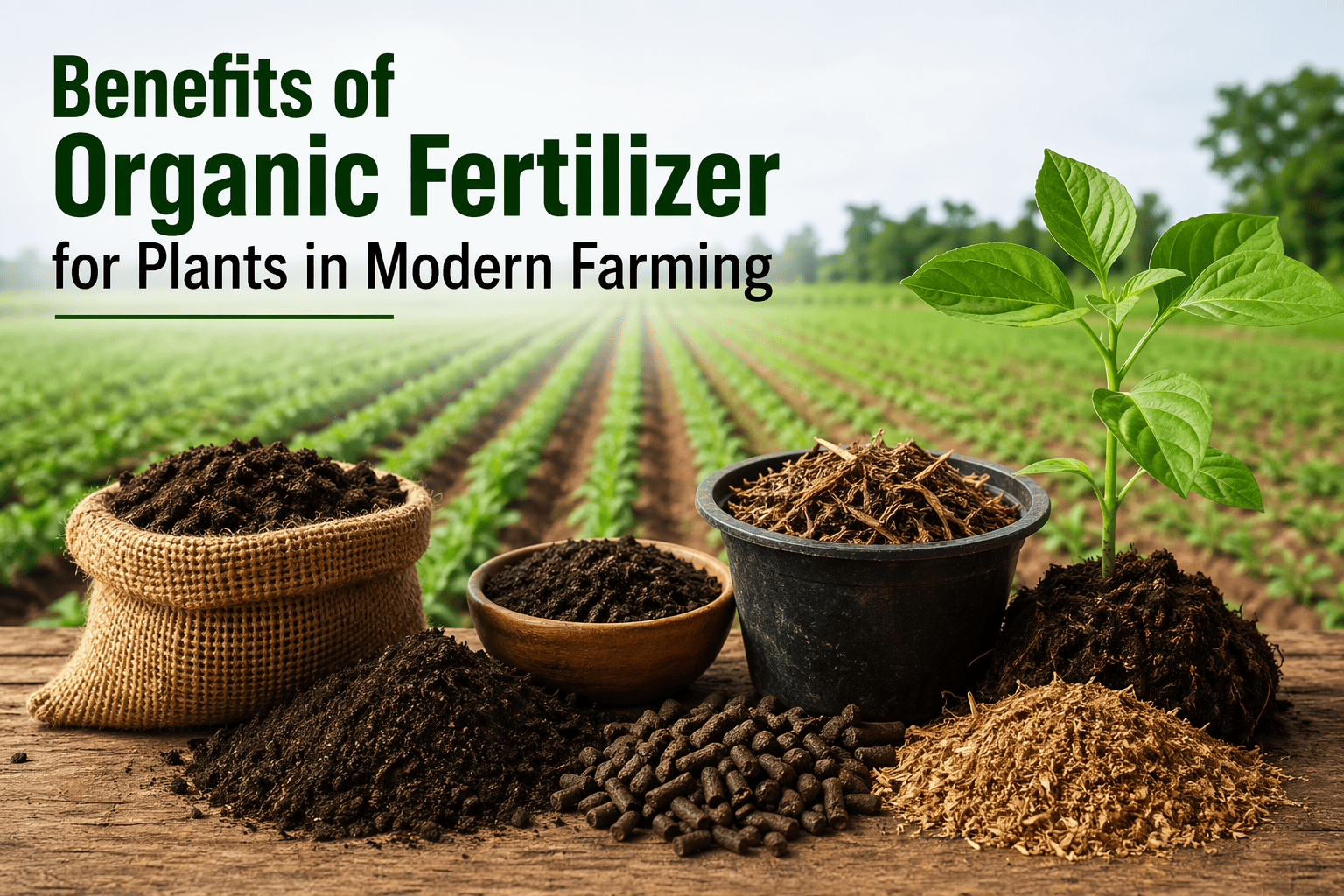
Organic fertilizer for plants is becoming very popular among farmers in India. Today, many farmers are moving towards natural farming methods because they want better soil health, safe crops, and long-term benefits. Unlike chemical fertilizers, organic fertilizers are made from natural materials and do not harm the environment.
When we talk about organic fertilizer for plants, we also understand the benefits of organic fertilizer and the advantages of organic fertilizer in improving soil and crop quality.
Choosing the right organic fertilizer company is also important to get good results. Organic fertilizers not only provide nutrients to plants but also improve soil fertility for future crops.
Benefits of Organic Fertilizer for Plants
Organic fertilizers offer many benefits for both plants and soil:
1. Improves Soil Structure and Health
- Organic fertilizers add natural matter (like compost and manure) to the soil
- This makes hard soil loose and easy to work with, so roots can grow deeper
- Soil becomes better at holding water, which helps crops during dry periods
- Nutrients stay in the soil for a longer time, reducing loss
- Overall, it improves long-term soil fertility and productivity
2. Slow Release of Nutrients
- Nutrients are not given all at once; they are released slowly over time
- Soil microorganisms break down the organic material step by step
- Plants get a continuous and balanced supply of nutrients
- This avoids sudden overfeeding and reduces nutrient wastage
- Helps maintain steady plant growth without stress
3. Feeds Useful Soil Microbes
- Organic fertilizers increase the number of beneficial microbes in the soil
- These microbes convert nutrients into forms that plants can easily absorb
- They also help improve soil structure and protect plants from harmful organisms
- Healthy microbial activity leads to better soil fertility and crop growth
4. Prevents Root Burn
- Organic fertilizers are mild and less concentrated compared to chemical fertilizers
- They do not cause root burn or leaf damage, even if used regularly
- This makes them safer for young plants and sensitive crops
- Reduces the risk of crop loss due to over-fertilization
5. Provides Micronutrients
- Along with the main nutrients (NPK), they also supply important micronutrients
- Nutrients like calcium, magnesium, zinc, and iron are essential for plant health
- These nutrients help in processes like photosynthesis, growth, and flowering
- Prevents common deficiency problems in crops
6. Environment-Friendly
- Organic fertilizers do not contain harmful chemicals
- They reduce pollution of soil, water, and air
- There is less risk of nutrients washing away into rivers and groundwater
- Supports eco-friendly and sustainable farming practices
7. Supports Strong Plant Growth
- By improving soil health, plants grow stronger and healthier
- Roots become deeper and more developed
- Plants become more resistant to pests, diseases, and weather stress
- Results in better crop yield and improved quality of produce
These benefits make organic fertilizers ideal for long-term farming.
How to Choose the Right Organic Fertilizer?
Choosing the right fertilizer depends on your crop and soil conditions.
- Test your soil first to know which nutrients (N, P, K) are needed and avoid using too much fertilizer.
- Fast fertilizers like fish meal, blood meal, seaweed, and poultry manure give quick results.
- Slow fertilizers like compost, bone meal, and hoof/horn meal work for a longer time and improve soil.
- Use nitrogen-rich fertilizers (like blood meal or manure) for leafy plants.
- Use phosphorus and potassium fertilizers (like bone meal or rock phosphate) for flowers and fruits.
- Dry fertilizers are easy to spread on large areas.
- Liquid fertilizers are quickly absorbed by plants through leaves or roots.
- Compost makes soil healthy and improves its quality.
- Choose good quality compost that is dark brown, even in size, and properly prepared (certified like FCO, NPOP).
What to Look for in an Organic Fertilizer Company?
Choosing the right organic fertilizer company is very important.
- Make sure the product is approved by the government (like FCO in India) or certified by trusted organic bodies (NPOP, USDA NOP, EcoCert) so you know it is truly organic.
- Check the nutrient details (NPK) and see if the product improves soil health and works for a longer time.
- Choose companies that offer different types of fertilizers like compost, vermicompost, bone meal, neem cake, and biofertilizers.
- Pick a company with a good reputation and clear information about where its raw materials come from.
- Go for products that agricultural universities or research centers test.
- Choose companies that follow eco-friendly methods and reduce waste.
- Select brands that provide proper guidance on how to use the product and help with crop-related issues.
Conclusion
Organic fertilizer for plants is the best choice for farmers who want sustainable and profitable farming. It improves soil fertility, supports healthy crop growth, and reduces dependency on chemicals.
Instead of looking for quick results, farmers should focus on long-term soil health. Organic fertilizers not only increase yield but also improve crop quality.
Start your organic farming journey with trusted solutions from SV Agro Solutions, a leading organic fertilizer company offering high-quality products like organic fertilizers, biostimulants, CRF (controlled-release) fertilizers, and micronutrients to improve soil health and boost crop productivity.
FAQs
1. How long does organic fertilizer take to work?
Organic fertilizer takes about 2-6 weeks to work as it slowly breaks down in the soil.
2. Why is it important to apply organic fertilizer?
It helps improve soil health, supports plant growth, and is safe for the environment.
3. Can I use too much organic fertilizer?
Yes, too much can still harm plants even though it is safer than chemical fertilizers.
4. What are the three major types of organic fertilizer?
The main types are dry fertilizers, liquid (foliar) fertilizers, and growth enhancers.